
Contact our team for professional guidance and solutions.
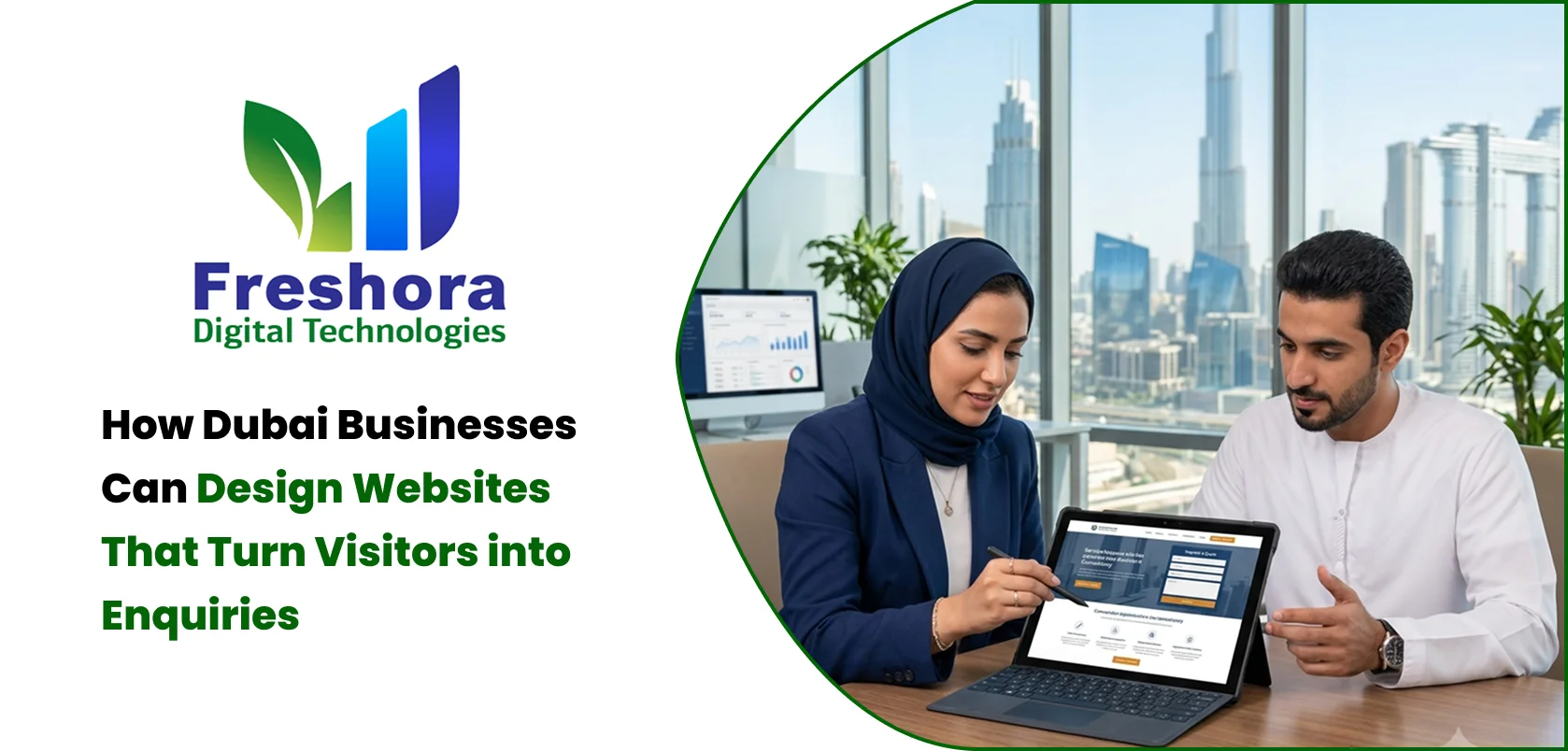
Website Design for Dubai Businesses should prioritise clear service messaging, fast mobile performance, intuitive navigation, visible contact options, and credible business information. When visitors can quickly understand an offer, evaluate the company, and contact the right team without unnecessary steps, a website becomes a more effective channel for generating qualified enquiries and supporting business growth.
A business website Development can attract visitors through search engines, social media, referrals, and paid advertising, yet still generate fewer enquiries than expected. The problem is not always a lack of traffic. Visitors may leave because they cannot understand the service quickly, find relevant information, identify what makes the business trustworthy, or determine how to get in touch. For companies operating in Dubai, where businesses often serve customers from different industries, nationalities, and language backgrounds, a website must communicate value clearly and make the next step simple. Effective design therefore requires more than attractive visuals. It combines customer research, content structure, user experience, technical performance, and measurable conversion goals. By designing every important page around the questions customers ask before making contact, businesses can create a digital experience that supports enquiries instead of simply displaying company information.
Before choosing colours, layouts, animations, or images, determine the primary purpose of the website. A consultancy may need to generate meeting requests, a cleaning company may want quotation enquiries, a real estate business may focus on property viewings, and an e-commerce store may aim to complete purchases.
Each objective requires a different page structure and conversion path.
Define one primary goal: Decide whether the main action should be requesting a quotation, booking a consultation, scheduling a demonstration, calling the business, or purchasing a product.
Identify your target customers: Understand their requirements, common concerns, budget expectations, and the information they need before contacting a provider.
Set measurable outcomes: Track completed enquiry forms, qualified leads, phone calls, WhatsApp conversations, and other actions that indicate genuine customer interest.
Separate primary and secondary actions: Keep the most important conversion action prominent while allowing visitors to explore supporting information when necessary.
For example, a Dubai-based IT consultancy could make “Book a Consultation” its primary call to action, while a downloadable service brochure remains a secondary option. This gives visitors a clear next step without overwhelming them with competing choices.
Your homepage should help a first-time visitor answer three questions: What does your business offer? Who does it help? Why should someone consider contacting you?
A vague headline such as “Welcome to Our Website” uses valuable space without explaining the business benefit. A more effective headline might be “Custom Software Solutions That Simplify Business Operations” for a technology company.
An effective homepage should include:
A specific headline that communicates the main customer benefit.
A short supporting statement explaining the services and intended audience.
A prominent call-to-action button that leads to the appropriate next step.
A concise introduction to the main services or product categories.
Relevant testimonials, client examples, credentials, or other verifiable trust signals.
Clear contact options for visitors who are ready to make an enquiry.
The objective is to reduce uncertainty. Visitors should not have to read several paragraphs or explore multiple pages before understanding whether the business can meet their needs.
The website user journey in Dubai should reflect how potential customers research, compare, evaluate, and contact businesses. Visitors arriving from a Google search for a specific service may already know what they want, whereas someone arriving through a social media advertisement may need more information before making a decision.
A useful customer journey follows five stages:
Discover: The visitor arrives from search, social media, a referral, or an advertisement.
Understand: Clear service pages explain the offer, intended customers, benefits, and scope of work.
Evaluate: Reviews, case studies, FAQs, company information, and transparent processes build confidence.
Take action: The visitor submits a form, calls the business, starts a WhatsApp conversation, or books an appointment.
Receive a response: The business follows up promptly, understands the requirement, and guides the prospect towards the next step.
Keep the main navigation concise, organise services logically, and link related pages naturally. A visitor interested in website development, for example, should be able to find relevant project examples and a quotation form without returning to the homepage repeatedly.
CTA design for UAE websites should focus on clarity, relevance, and ease of use. A button is more effective when visitors understand what happens after clicking it.
Compare these examples:
|
Generic CTA |
More Specific Alternative |
|
Submit |
Request a Quote |
|
Click Here |
Explore Our Services |
|
Contact Us |
Discuss Your Project |
|
Learn More |
View Our Case Studies |
|
Send |
Send Your Enquiry |
The best wording depends on the page and the visitor's level of interest. Someone comparing providers may prefer to review a portfolio, while a visitor who has already chosen a service may be ready to request pricing.
For better results:
Place the primary CTA near the headline, where visitors can see it without searching.
Repeat relevant CTAs after important service explanations and supporting evidence.
Use contrasting colours and sufficiently large buttons to improve visibility and accessibility.
Make buttons descriptive and ensure that every click leads to the promised destination.
Avoid displaying multiple equally prominent actions that compete for attention.
On mobile devices, consider persistent contact options where appropriate, but ensure they do not cover important content or interfere with reading.
A website should accommodate different ways of contacting a business. Some visitors prefer a telephone call, while others want to explain their requirements through WhatsApp or submit a detailed enquiry form.
The right combination depends on the service and the expectations of the intended audience.
Enquiry forms: Request only the information needed for an initial response. For many service businesses, a name, contact method, service requirement, and optional message are sufficient to start a conversation.
WhatsApp contact: A direct WhatsApp link can reduce friction for visitors who prefer messaging. Use a clear invitation, such as “Discuss Your Requirements on WhatsApp,” and make sure the business monitors incoming messages.
Click-to-call buttons: Make phone numbers clickable on mobile devices and display them consistently wherever contact information is important.
Booking options: Consultants, clinics, and other appointment-based businesses can provide a booking process that allows customers to choose an available time.
Confirmation messages: After a form is submitted, explain that the enquiry was received and provide realistic information about the next step. Avoid promising a response time the business cannot consistently meet.
Lead generation website design should not stop at collecting contact details. The website must also support a reliable process for receiving, qualifying, assigning, and responding to incoming enquiries.
Potential customers often need reassurance before sharing their details or discussing a project. A professional layout can create a positive first impression, but credible evidence helps visitors evaluate the business more meaningfully.
Useful trust elements include:
Genuine customer testimonials published with appropriate permission.
Relevant project examples that explain the original challenge and delivered outcome.
Accurate company information, contact details, and service coverage.
Verifiable qualifications, certifications, licences, or industry memberships where applicable.
Clear explanations of the working process, project scope, and support arrangements.
Accessible privacy information explaining how submitted personal details are handled.
Businesses serving customers across Dubai and the wider UAE may also need to explain whether they provide remote consultations, on-site services, or support in multiple languages. These details help prospective customers determine whether the business suits their needs.
Avoid invented reviews, unsupported performance claims, and generic badges that cannot be verified. Trust is stronger when the information is specific, relevant, and consistent across the website.
A website that performs well on a desktop computer may still create problems on a smartphone. Small text, difficult menus, oversized images, intrusive pop-ups, and forms that require unnecessary scrolling can interrupt the enquiry process.
Business website design in the UAE should therefore include mobile testing from the beginning, rather than treating responsiveness as a final adjustment.
Important improvements include:
Use responsive layouts that adapt to different screen sizes without horizontal scrolling.
Keep text readable and provide enough space between interactive elements.
Compress images and serve appropriately sized image files.
Reduce unnecessary scripts, animations, and third-party resources.
Use efficient caching and suitable hosting infrastructure.
Test enquiry forms, menus, telephone links, and WhatsApp links on actual mobile devices.
Google's Core Web Vitals provide useful technical targets for evaluating user experience: Largest Contentful Paint (LCP) of 2.5 seconds or less, Interaction to Next Paint (INP) of 200 milliseconds or less, and Cumulative Layout Shift (CLS) of 0.1 or less, measured at the 75th percentile. These are performance assessment targets, not guarantees of higher conversion rates.
A faster, more stable website removes avoidable barriers, helping visitors reach the information and contact options they need.
Not every visitor should be directed to the homepage. Someone searching for a particular service generally expects a page that addresses that exact requirement.
For example, a business offering website development, custom software, and e-commerce solutions can create separate pages for each service. Each page can explain the relevant process, benefits, deliverables, common questions, and appropriate enquiry action.
This approach supports search visibility while giving prospective customers more relevant information.
To strengthen service pages:
Use descriptive headings that reflect the visitor's actual question or requirement.
Explain the scope of the service and the types of customers it suits.
Include relevant examples, frequently asked questions, and internal links.
Provide accurate business and service information for the areas served.
Use descriptive page titles, meta descriptions, and URLs.
Ensure that the page's CTA matches its purpose.
Conversion-focused web design in Dubai works best when search relevance and customer experience support each other. Bringing visitors to a page is only the first step; the page must help them decide what to do next.
Dubai serves residents, companies, investors, and visitors from a wide range of backgrounds. Businesses should identify the languages and communication preferences relevant to their actual customer base instead of assuming that every website requires the same approach.
For companies that serve both Arabic-speaking and English-speaking customers, a properly planned bilingual website can improve accessibility. Arabic pages require right-to-left layout support, suitable typography, correctly aligned navigation, and content that is translated professionally rather than copied through automated translation without review.
Other useful local considerations include:
Displaying the correct UAE telephone number and relevant contact details.
Explaining service availability across Dubai or other emirates accurately.
Providing transparent pricing or a clear quotation process when appropriate.
Supporting communication channels that the target audience actually uses.
Ensuring that forms and privacy practices are appropriate for the business and applicable regulations.
These decisions should be based on customer research and operational requirements. Local relevance is most useful when it answers genuine customer questions rather than simply repeating location names throughout the website.
Businesses can evaluate their websites through a simple five-part framework: Clarity, Confidence, Convenience, Continuity, and Measurement.
Can a new visitor understand the offer, intended customer, and main benefit within a few seconds?
Does the page provide relevant proof, accurate company information, and answers to common concerns?
Can visitors call, message, book, or submit an enquiry without unnecessary steps?
Does each page guide visitors towards a logical next step, and does the business follow up on enquiries?
Can the business identify which pages, channels, and actions generate meaningful leads?
This framework can be applied to a new website before launch or used to identify improvements on an existing one. It also helps teams prioritise changes according to their likely business impact instead of redesigning pages based only on personal preferences.
A website should be evaluated by the quality of the results it produces, not simply by the number of visitors or the appearance of its pages.
Google Analytics 4 can help businesses monitor user interactions and key events, while Google Search Console provides information about organic search performance. Depending on the business, additional tools such as heatmaps, session recordings, or a CRM may help identify where visitors encounter difficulties.
Start by tracking these metrics:
|
Metric |
What It Helps You Understand |
|
Enquiry conversion rate |
The proportion of visitors who complete a defined enquiry action. |
|
Qualified leads |
How many enquiries match the business's target customers and service scope. |
|
CTA click-through rate |
Whether visitors interact with the main contact or booking options. |
|
Form completion rate |
Whether visitors who begin a form successfully submit it. |
|
Mobile conversion rate |
Whether mobile visitors complete important actions as effectively as expected. |
|
Lead response time |
How quickly the business follows up on incoming enquiries. |
A simple calculation illustrates why measurement matters.
If a website receives 2,000 visits in a month and generates 30 enquiries, its enquiry conversion rate is 1.5%. If a later period produces 45 enquiries from the same number of visits, the rate becomes 2.25%.
That is a 50% increase in enquiries relative to the original result, assuming the visits and enquiry definitions remain comparable. It is an illustrative example, not a promised outcome.
Change one important element at a time where practical, allow sufficient data to accumulate, and compare results across comparable periods. This helps distinguish meaningful improvements from normal fluctuations in traffic or customer demand.
For companies looking to improve their digital presence, Freshora Digital Technologies offers website development solutions with an approach that connects business objectives, user experience, technical performance, search visibility, and conversion-focused architecture.
A website project can begin by identifying the primary enquiry goal, understanding the target audience, mapping important user journeys, and deciding which features are necessary. The development stage can then focus on responsive layouts, service-page structure, contact options, performance, and relevant integrations.
Depending on the business requirements, useful capabilities may include:
Custom website design and development aligned with the company's services and brand identity.
Arabic and English website experiences where required.
WhatsApp, telephone, and enquiry-form integrations.
Search-friendly content structure and technical SEO foundations.
Analytics configuration to monitor important customer actions.
Scalable functionality that can support future business requirements.
The goal is not to add every available feature. It is to create a website that makes it easier for the right customers to understand the offer, trust the business, and initiate a conversation.
Businesses can explore Freshora's website development services at to understand the available approach and discuss their website requirements.
Even a professionally developed website can underperform when its structure creates unnecessary friction.
Prioritising visual effects over usability: Heavy animations and decorative elements should not delay access to important information or contact options.
Using generic headlines: Visitors need a clear explanation of the business's offer rather than broad claims about quality or innovation.
Making contact difficult: Hiding telephone numbers, placing enquiry forms several clicks away, or using broken links can prevent interested customers from reaching the team.
Collecting excessive information: Long forms can discourage visitors who only want an initial discussion or quotation.
Ignoring mobile usability: A desktop-friendly layout is not sufficient if buttons, navigation, and forms are difficult to use on smartphones.
Publishing unsupported claims: Unverified statistics, exaggerated promises, and fabricated testimonials can damage credibility.
Failing to track results: Without reliable conversion tracking, businesses may invest in design changes without knowing whether they improve enquiry generation.
A practical improvement process begins with the most significant obstacles to customer action. Fixing a broken form or unclear service offer may be more valuable than redesigning the entire website.
Designing a website that generates enquiries requires a clear understanding of customer needs, business objectives, and the steps visitors must take before contacting a company. For business Automation in Dubai, an effective approach combines direct messaging, relevant service pages, credible trust signals, mobile-friendly layouts, accessible contact options, and reliable performance measurement. Website design should therefore be treated as an ongoing business improvement process rather than a one-time visual project. Companies should regularly review enquiry data, test important user journeys, remove unnecessary friction, and improve pages based on real customer behaviour. With a structured approach to design and development, a business can create a website that does more than establish an online presence: it can support meaningful conversations, generate better-qualified leads, and contribute to sustainable growth.

Quick Answer Website Redesign Dubai projects should begin with an audit of the existing website's p... Read More
Quick Answer Mobile Web Design UAE focuses on creating websites that are easy to navigate, read, an... Read More
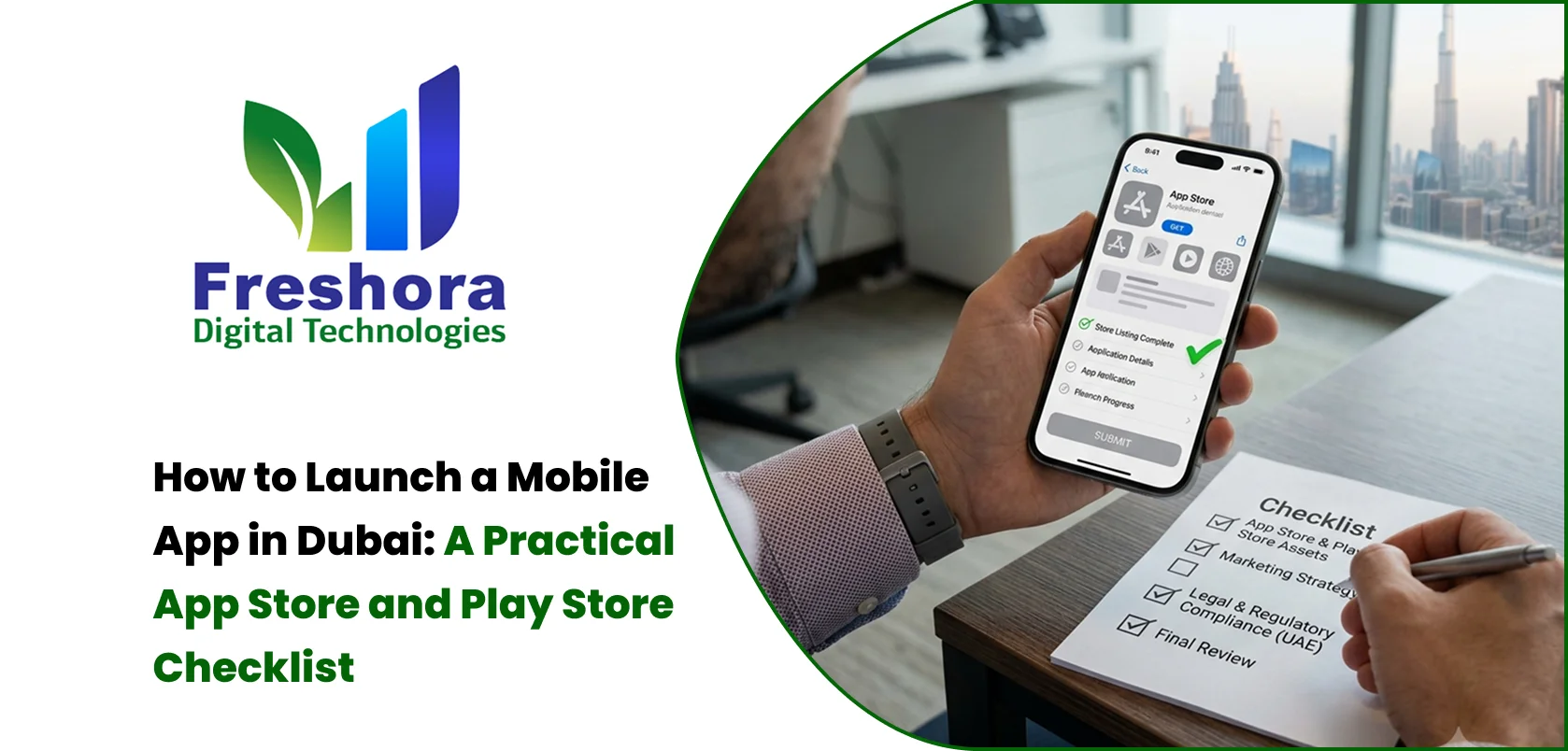
Completing mobile app development is only one part of launching a digital product. Before customers... Read More
Our expert will call you shortly to understand your needs and help grow your business.
Get exclusive digital marketing tips, SEO insights, web & app updates, and job opportunities delivered straight to your inbox.
Join our WhatsApp channel for instant digital marketing tips, SEO insights, web & app updates, and latest job opportunities.
Join NowFreshora Digital Technologies proudly serves businesses across Dubai and the United Arab Emirates, including Abu Dhabi, Sharjah, Ajman, Umm Al Quwain, Ras Al Khaimah, and Fujairah.
We also serve businesses across the GCC region, including Saudi Arabia, Qatar, Kuwait, Bahrain, and Oman, providing Website Development, Mobile App Development, Software Development, SEO, Google Business Profile Management, Digital Marketing, UI/UX Design, E-commerce Development, AI Solutions, and other digital technology services designed to strengthen online visibility, generate enquiries, and support business growth. We also work with businesses internationally across India, Singapore, Canada, Australia, the United Kingdom, and the United States, delivering innovative digital solutions tailored to different markets and business requirements.

